

A guide to protecting seniors from fraud
If you've found yourself taking on a more active role in your parents' financial well-being, we want you to know that you're not alone in this journey.
Many of us are helping our aging parents navigate everything from healthcare decisions to managing monthly bills—and increasingly, we've become their most trusted guardians against financial scams.
Unfortunately, fraudsters are becoming more sophisticated by the day, and older adults are being targeted with alarming frequency. Whether it's deceptive phishing texts, convincing fake tech support calls, or professional-looking emails, these scams are deliberately designed to exploit trust, isolation, and moments of confusion. The troubling reality is that they're succeeding; according to the Federal Bureau of Investigation (FBI), financial losses among older Americans continue to rise at an unprecedented rate.
That's exactly why we've compiled some practical steps you can take today to help safeguard the older adults who mean the most to you. While we don't claim to be cybersecurity experts, we firmly believe that understanding these evolving threats is an essential part of protecting the people and personal finances that matter most to your family.
In this comprehensive guide, we'll walk you through what warning signs to watch for and share strategies to help your family and friends feel more confident and empowered when it comes to spotting red flags before it's too late.
How Big Is the Problem?
The scope of this challenge is staggering. In 2024, consumers worldwide lost more than a trillion dollars to various scams, according to the Global Anti-Scam Alliance. Even more concerning, over half of all consumers reported encountering fraudsters at least once every week!¹
Recent research has revealed that two out of every five seniors (over age 60) have unfortunately fallen victim to some form of scam. While 37 percent of seniors reported being direct victims, a striking 73 percent knew someone who had been targeted. Among those who were scammed, nearly half (49 percent) reported actual financial losses, with the average loss reaching $3,590.²
Identity theft involving sensitive personal information like Social Security numbers can create long-lasting challenges that extend far beyond the initial incident. Unfortunately, thieves often wait months or even years before using stolen information, or they may sell it on the dark web, which means families must remain vigilant indefinitely. Legal fees and other recovery costs can significantly compound the financial impact, especially when identity theft cases become complex. Some victims find themselves needing to seek government assistance during their recovery journey, which truly highlights the potentially devastating magnitude of identity theft challenges.
Beyond the considerable inconvenience and genuine financial consequences of fraud, there's also a deeply personal psychological impact that shouldn't be overlooked, including feelings of shame, ongoing safety concerns, and worries about maintaining independence.
What Scams Are Working the Best?
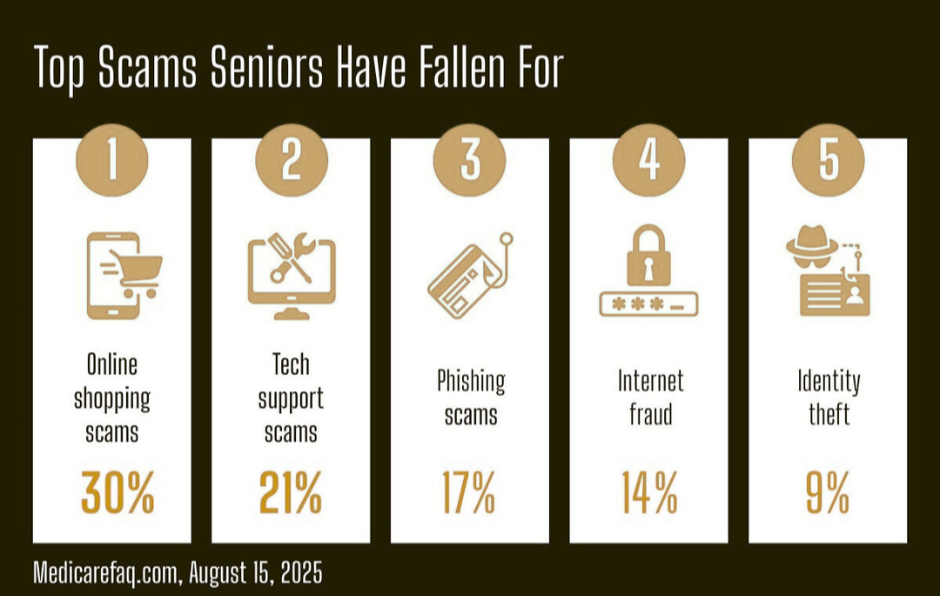
Some of the most common scams that senior citizens have encountered include online shopping fraud, tech support scams, phishing attempts, various forms of internet fraud, and identity theft.¹
- Online Shopping Scams
Online shopping scams occur when cybercriminals present themselves as legitimate sellers of services or merchandise, with the sole purpose of stealing personal information or money. They skillfully create fake websites that appear genuine or cleverly impersonate well-known retailers. Other criminals establish fake accounts on established online marketplaces, offering items that seem "too good to be true."³
Here are some important protective measures to consider:³
- We recommend avoiding clicking on suspicious links from unsolicited messages or questionable social media advertisements. For added security, consider typing URLs directly instead of clicking on search results or unexpected messages.
- When possible, choose credit cards over debit cards, as credit cards typically offer enhanced security features and may provide better fraud protection if a scam occurs.
- Focus your shopping on reputable websites, and be cautious of sites with obvious discrepancies, consistently poor reviews, or unrealistic offers.
- Help your loved ones manage their financial accounts by encouraging strong, unique passwords for each account, enabling Multi-Factor Authentication (MFA), setting up helpful financial alerts, and creating accounts only with trusted retailers.
- Tech Support Scams
Tech support scams often begin with an alarming pop-up message featuring the logo of a well-known technology company, falsely claiming that a computer has been infected with a virus and directing the user to click a link or call a provided support number. These criminals then request remote access to the computer, which gives them complete access to all stored data and allows them to install harmful malware. These scammers may also attempt to sell worthless software, maintenance services, or warranty programs.⁴
AARP has found that consumers aged 60 and older are five times more likely than younger individuals to lose money to tech support scams. These particular scams cost older Americans more than $175 million in 2023 alone, as reported by the Federal Trade Commission (FTC) in October 2024.⁴
It's important to remember that legitimate technology companies never initiate contact by calling, emailing, or texting about computer problems, and they will never ask you to make a call or click on a suspicious link. The FTC emphasizes that if an unexpected tech support person contacts you, it's wise to be skeptical. Should this situation arise, we recommend hanging up immediately, avoiding clicking on any pop-ups, refusing remote access requests, and never sharing passwords with unknown callers.⁴
- Phishing Scams
Phishing scams represent a broad category of cybercrimes where targets are contacted via email, telephone, or text message by someone impersonating a legitimate person or trusted institution. Victims are then skillfully lured into providing sensitive information such as personal identity details, banking and credit card numbers, and passwords. This stolen information is subsequently used to access accounts, often resulting in identity theft and significant financial losses.
While phishing attempts can target anyone, seniors should remain particularly alert to these specific scams:⁵
- Medicare/Health Insurance Scams
Fraudsters pose as Medicare representatives with the goal of stealing personal information or promoting fake services. We strongly advise never sharing Medicare numbers with suspicious contacts and never paying for services that haven't been received. - Grandparent Scams
A caller pretends to be a grandchild in serious trouble (such as being in jail or injured) and urgently requests money. These criminals typically insist on complete secrecy and specifically ask for wire transfers or gift cards as payment methods. - Sweepstakes/Lottery Scams
Individuals receive contact informing them they've won a substantial prize but must pay various fees upfront to claim their winnings. Our recommendation is simple: hang up the phone, discard any letters, and delete suspicious emails immediately. - IRS or Government Impersonation Scams
Some scammers attempt to intimidate older individuals by falsely claiming to represent the IRS or another government agency, demanding immediate payment and threatening jail time for non-compliance. Remember that legitimate government agencies never use high-pressure tactics or make threats over the phone or via email. - Charity Scams
Fraudulent charities can deceive well-intentioned people by soliciting donations, particularly following highly publicized natural disasters. We encourage families to stick with charities they know and trust, while avoiding organizations with vague missions, those that pressure for immediate donations, or those that refuse to provide proper documentation. - Financial Services Scams
Financial services scammers employ various communication methods, including calls, texts, and email messages, to impersonate legitimate banks, mortgage companies, or debt collectors. They may falsely claim that a checking or savings account has been compromised and request personal information such as passwords or Social Security numbers to "resolve" the issue. Some even make threats of arrest for supposedly unpaid bills.⁶
Technology and Artificial Intelligence Make Scamming Easier
Technology has unfortunately made scams increasingly commonplace, enabling fraudsters to develop remarkably sophisticated digital schemes. The concerning reality is that bad actors no longer need to be technology professionals to orchestrate large-scale cyber-fraud operations. Innovative tools now allow them to effortlessly generate millions of highly convincing emails, text messages, and websites that can successfully deceive even the most cautious individuals.² When these tactics can fool digitally savvy individuals, imagine the potential impact on your beloved family members.
Artificial intelligence scams are rapidly increasing, with AI-powered tools now capable of targeting consumers in highly sophisticated and personalized ways. Some of the most recent AI-enabled scams include voice cloning, deepfake technology, and enhanced phishing email attacks.⁷
Unlike traditional scams that relied on more generic approaches, AI now enables criminals to create websites, emails, and impersonations that appear, feel, and sound incredibly authentic and believable. By leveraging AI technology, scammers can quickly, easily, and inexpensively launch extensive fraud campaigns or precisely target specific individuals using information gathered from social media and other online platforms.
The FBI has issued warnings about the rise of AI scams, stating that "as technology continues to evolve, so do cybercriminals' tactics."⁷
Here are some of the most concerning recent AI-enabled scams:⁷
- Voice Cloning: AI can now clone a person's voice using just a brief audio sample. Voice cloning is frequently used in scams where fraudsters impersonate family members who are supposedly in trouble or experiencing financial distress and urgently need money. As you can imagine, this technique can be particularly effective when targeting older adults.
- Deepfake Scams: Deepfake technology uses AI to create remarkably realistic videos, photos, and audio clips that appear to show someone saying or doing something they never actually did. This sophisticated technology is being used to impersonate public figures or celebrities to promote fraudulent products or persuade consumers to take specific actions. Deepfakes are becoming increasingly sophisticated, which significantly amplifies this growing societal problem.
- Enhanced Phishing Email Attacks: While phishing emails designed to steal personal information have existed for some time, AI has dramatically enhanced the level of deception possible. An article from the May 2024 Harvard Business Review explains, "With AI, scammers can generate remarkably authentic phishing emails that successfully bypass spam filters. These emails often appear to be genuine account notifications or urgent requests from reputable companies. What's particularly concerning is that their content is often highly personalized."
Many Scams Go Unreported
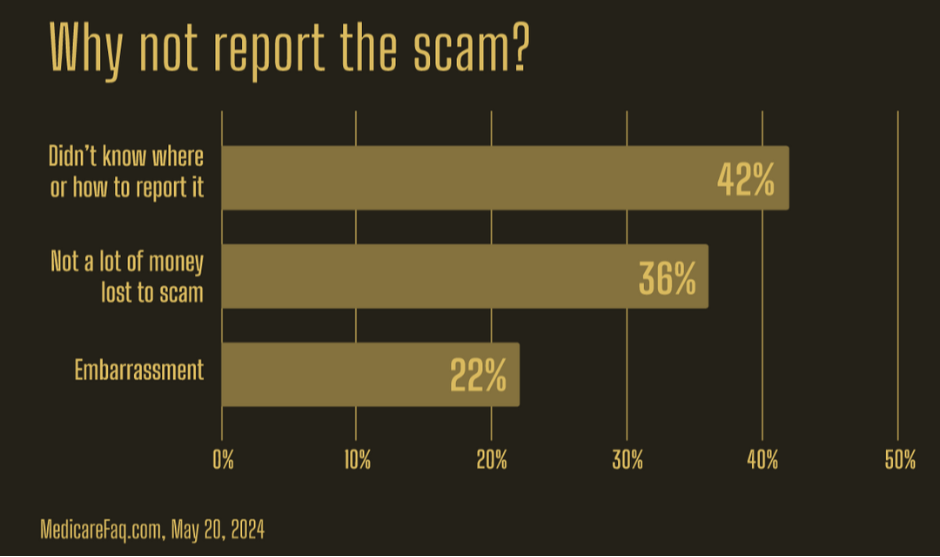
Unfortunately, many people choose not to report scams, which makes these crimes particularly difficult to prosecute and creates challenges in obtaining reliable statistics. Elderly victims may feel too embarrassed to admit they were taken advantage of, even when speaking with trusted family members. Others simply don't know where to turn to report these crimes. Criminals are well aware of this reluctance and specifically consider elderly people "low risk" targets. By openly discussing the realities of scam risks with your family, you can help remove the stigma while equipping your loved ones with valuable tools to better manage cyber threats.¹
Actions to Protect Your Family
There are several steps you can take to help your family effectively manage attempted scams. Some involve implementing helpful technology solutions, while others are low-tech and simply require conversations and perhaps minor adjustments to daily habits.
- Encourage Verification: Make sure your loved ones understand the importance of confirming any unexpected request or message before taking action, especially when it seems unusual or creates urgency. If someone claims to be a relative or authority figure requesting immediate cash assistance, encourage them to call you or another trusted family member who can help confirm whether the request is legitimate.
- Strengthen Password Security: A highly effective way to prevent theft is helping your family create unique passwords for each of their accounts and update them regularly. Many people unfortunately use identical passwords across multiple accounts and fail to update them, which can create significant vulnerabilities.
- Install Protective Technology: Consider installing trusted security software on your family's devices, such as quality antivirus programs or other tools specifically designed to protect against phishing scams, deepfakes, and spam text messages. Additional helpful options include password managers, identity theft protection services, virtual private networks, and two-factor authentication on devices and accounts.
- Limit Personal Information Sharing: Gently remind your family about being thoughtful regarding how much personal information they share online. Scammers can use virtually any information provided to create more personalized and convincing attacks.
- Regular Statement Reviews: Encourage regular review of credit card and bank statements to quickly spot any suspicious or unauthorized activity.
- Consider Credit Freezing: You might want to consider helping freeze all of your family's credit files, which prevents anyone from viewing or requesting their credit report, opening new accounts, applying for loans, or obtaining new credit cards while the freeze remains in place.
- National Do Not Call Registry: Another protective measure involves registering your family's phone numbers with the National Do Not Call Registry. This should meaningfully decrease the volume of unsolicited calls they receive, potentially lowering their risk of falling victim to phone-based scams.
- Fraud Detection Tools: Ensure that bank accounts have automatic fraud prevention and detection tools enabled to provide immediate alerts when suspicious activity is identified. Online banking notifications represent one of the fastest ways to receive these important alerts. If your family members haven't already done so, consider helping them set up their online banking accounts.
- Trusted Contact Designation: Consider adding a "trusted contact" to your family's investment accounts. This designated person can be contacted by the financial institution if there are any concerns about potentially fraudulent account activity. A trusted contact might be a family member or another trusted individual. This arrangement provides an valuable additional layer of security for your family's accounts and enables your financial firm to be better positioned to help protect and manage those accounts.⁸
We Are Here for You
By implementing these preventive measures and maintaining vigilant awareness, you can significantly help your family reduce the risk of becoming victims of increasingly sophisticated and persistent criminals.
If you have any additional questions or concerns, please don't hesitate to reach out to us. We're here to support you and your family every step of the way.
Sources
1 Medicarefaq.com. May 20, 2024
https://www.medicarefaq.com/blog/senior-citizen-scam-statistics/#4
2 Forbes, March 18, 2025
3 Keeper, January 08, 2024
https://www.keepersecurity.com/blog/2024/01/08/what-to-do-if-you-get-scammed-while-shopping-online/
4 AARP, December 16, 2024
5 Consumer Affairs, June 11, 2025
https://www.consumeraffairs.com/news/the-top-10-scams-that-target-seniors-061125.html
6 National Council on Aging, February 20, 2025
https://www.ncoa.org/article/top-5-financial-scams-targeting-older-adults/
7 National Council On Aging, October 31, 2024
https://www.ncoa.org/article/what-are-ai-scams-a-guide-for-older-adults/
8 NASAA, June 2025
https://www.nasaa.org/investor-education/investor-library/trusted-contact/